
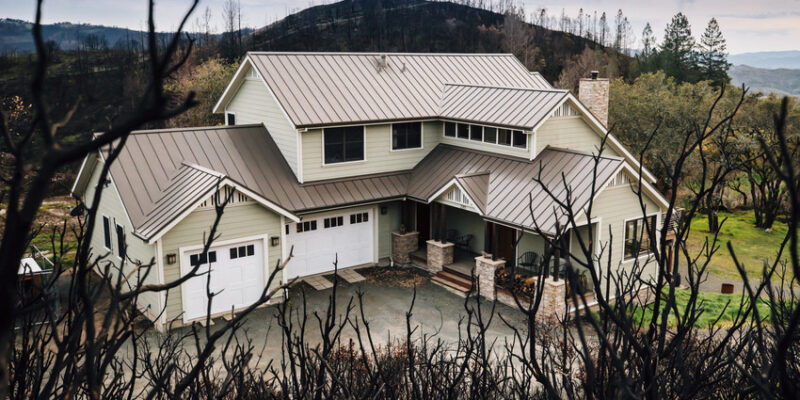
fire resistant roofing Southern California

The Challenge of Wildfires: How Fire-Resistant Roofing is Protecting Southern California Homes

Southern California’s beauty is matched by its susceptibility to natural disasters, notably wildfires, which have become increasingly frequent and devastating due to climate change. Homeowners in this region face the unique challenge of safeguarding their properties against these fiery threats. A critical frontline defense for any home in such fire-prone areas is the roof, and advancements in fire-resistant roofing materials are providing a beacon of hope.

Understanding the Threat

Wildfires can engulf homes and communities with little to no warning, propelled by the region’s dry conditions and seasonal Santa Ana winds. The roof, being the largest exposed surface of a house, is particularly vulnerable to flying embers and direct flame contact. Traditional roofing materials can easily catch fire, but the advent of fire-resistant roofing options offers a viable solution to this dire problem.

The Rise of Fire-Resistant Roofing

In response to the wildfire challenge, the roofing industry has innovated materials that can significantly reduce the risk of a home catching fire. Fire-resistant roofing materials, such as metal, clay, concrete tiles, and specially treated wood shakes, have been developed to withstand extreme heat and prevent the spread of fire. These materials are rated Class A, the highest fire-resistance rating, offering the best defense against the threat of wildfires.

The Benefits of Upgrading

The primary benefit of fire-resistant roofing is enhanced safety. Homes equipped with materials designed to resist ignition from flying embers or flames stand a better chance of surviving a wildfire. Furthermore, many insurance companies recognize the reduced risk these materials pose, often offering lower premiums to homeowners who make the upgrade. Beyond safety and potential savings, fire-resistant roofing also comes in various styles and colors, allowing homeowners to maintain aesthetic appeal without compromising protection.

Local Initiatives and Support

Recognizing the importance of fire-resistant roofing, local governments in Southern California have implemented building codes and regulations to encourage or, in some areas, require its use. Various initiatives and rebate programs are also in place to assist homeowners with the cost of upgrading their roofing materials. These measures underscore the collective commitment to enhancing community resilience against wildfires.

A Community Effort

Protecting homes from wildfires is not solely the responsibility of individual homeowners but a communal endeavor. Neighborhoods where the majority of homes are equipped with fire-resistant roofs can create a stronger barrier against the spread of wildfires, potentially saving entire communities. It’s an investment in collective safety and peace of mind, knowing that proactive steps are being taken to mitigate the impact of these natural disasters.

Looking Ahead

As Southern California continues to navigate the challenges posed by climate change and wildfires, the importance of adopting fire-resistant roofing cannot be overstated. It’s a practical, effective measure that significantly enhances the safety of homes and communities. By prioritizing materials designed to withstand the threats unique to this beautiful region, homeowners are not just investing in their property but in a safer future for Southern California.

Embracing fire-resistant roofing is a clear step toward resilience, reflecting a broader commitment to safeguarding not just individual homes but the entire community from the ever-present threat of wildfires.
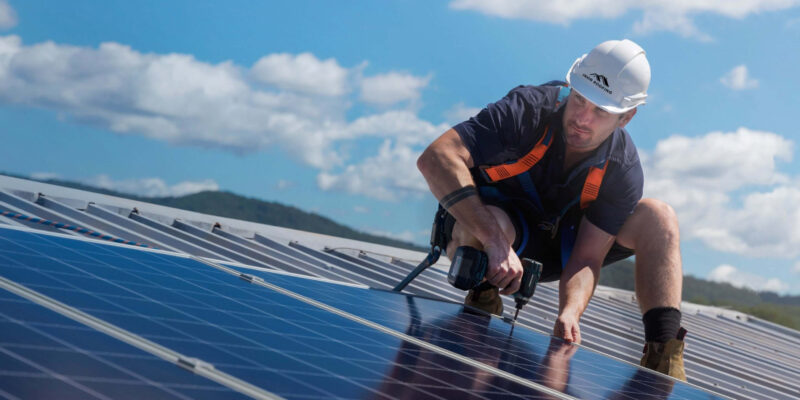
solar roofing Southern California

The Solar Roof Revolution: Embracing Renewable Energy in Southern California

In the golden state of California, where the sun blesses the land with its abundant energy nearly year-round, homeowners are looking towards the future of roofing with great anticipation. Southern California, known for its picturesque landscapes and progressive environmental policies, is at the forefront of a significant shift towards renewable energy solutions. Among these, the integration of solar panels into roofing systems stands out as a beacon of innovation and sustainability.

The Rising Popularity of Solar Roofs

Solar roofs are no longer a novelty; they have become a necessity. In Southern California, where the cost of electricity continues to rise and environmental awareness is at an all-time high, homeowners are actively seeking ways to reduce their carbon footprint while also saving on energy bills. Solar roofing offers a two-fold solution: it harnesses the power of the sun to generate clean energy, and it does so in a way that seamlessly integrates with the aesthetic of one’s home.

The Benefits Are Clear

The advantages of adopting solar roofing in Southern California extend beyond the environmental impact. Financial incentives, such as tax credits and rebates, make the transition more accessible to homeowners. Moreover, the long-term savings on electricity bills can be substantial. Solar roofs also increase property values, making them a wise investment in today’s real estate market.

Technological Innovations

Technological advancements have played a pivotal role in the solar roof revolution. Modern solar tiles are designed to mimic traditional roofing materials, such as slate or terracotta, making them a visually appealing option for homeowners. These innovations have addressed previous concerns regarding aesthetics, efficiency, and durability, making solar roofs more appealing than ever.

A Step Towards a Sustainable Future

The shift towards solar roofing in Southern California is more than just a trend; it’s a commitment to a sustainable future. By harnessing the sun’s power, homeowners are reducing their reliance on fossil fuels, decreasing their carbon footprint, and contributing to a cleaner environment. The movement towards renewable energy solutions like solar roofing is a testament to the region’s dedication to combating climate change.

Embracing the Change

For those considering making the switch to solar roofing, the process has never been easier. Local governments and service providers offer resources and support to help homeowners navigate the transition. From initial consultations to installation and maintenance, experts are available to ensure that the journey towards renewable energy is smooth and rewarding.

The Solar Roof Revolution is Here

The solar roof revolution in Southern California is not just about adopting new technology; it’s about embracing a lifestyle change. It’s a movement that fosters community, encourages sustainability, and paves the way for future generations. As more homeowners opt for solar roofs, they join a growing community committed to making a positive impact on the planet.

In Southern California, the future of roofing is bright, and it’s powered by the sun. Join the revolution and be part of the change towards a sustainable, energy-efficient future.

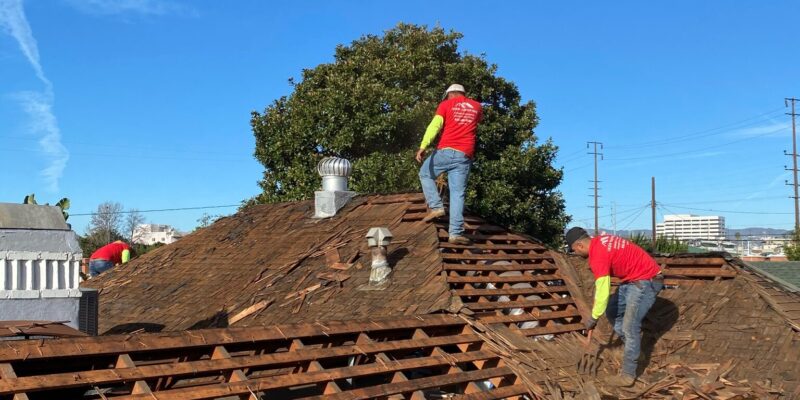
choosing a roofing contractor in Los Angeles

Choosing the Right Roofing Contractor in Los Angeles

Hiring a roofer in Los Angeles is a higher-stakes decision than most homeowners realize. A bad roof installed by an unlicensed crew costs you three times: once for the original job, once to tear it off, and once to install it correctly. Over the past several years we’ve been called in to redo work done by contractors who looked fine on paper — good reviews, confident sales pitch, matching shirts. Here is the checklist I’d give my own mother if she were hiring a roofer in LA, written from the perspective of a licensed contractor who has seen what goes wrong.

Step 1: Look up the license yourself — before the estimate

California’s Contractors State Licensing Board (CSLB) runs a free public lookup at cslb.ca.gov. Before you let a roofing salesperson set foot on your property, type their company name or license number into the “Check a License” tool. You are looking for five things:

  1. License is active and in good standing. Any status other than “Active” is a reason to walk away.
  2. Classification includes C-39 (Roofing). This is the specific license for roofing work. A general B (“General Building”) license can perform roofing only as incidental to a larger project. For a reroof, you want C-39.
  3. Bond is in place. California requires a $25,000 contractor bond. The lookup will show whether it’s current and who the surety is.
  4. Workers’ compensation insurance is active. The lookup shows carrier and policy effective dates. If a crew member is injured on your roof and the contractor doesn’t have workers’ comp, the liability can flow to you as the homeowner.
  5. No recent disciplinary actions or unresolved complaints. The CSLB publishes these on the license detail page.

Here is the rule that matters most and is most often ignored: any roofing contract over $500 (labor and materials combined) legally requires a licensed contractor in California. The “$500 threshold” is why unlicensed operators sometimes structure their pricing as “$499 for labor” plus separate material receipts — it’s a workaround, not a shield, and it leaves you with no recourse if the work fails.

Ikon’s CSLB license number is [INSERT IKON CSLB NUMBER]. You should be able to verify anyone you hire in under two minutes.

Step 2: Confirm who’s pulling the LADBS permit

The Los Angeles Department of Building and Safety requires a permit for nearly every reroof in the city. The permit costs money and takes time, which is why unscrupulous contractors try to skip it. Skipping the permit causes three concrete problems for you:

  • The work isn’t inspected, so defects aren’t caught until they leak.
  • Title 24 compliance isn’t documented, so your reroof is technically non-compliant.
  • When you sell, the unpermitted roof shows up in disclosures and either kills the sale, drops the price, or forces you to pay for retroactive permitting and corrections.

A real contractor will say, on the first visit, “We pull the LADBS permit as part of the job — it’s included in our estimate.” If a contractor suggests “you can just pull the permit yourself as the homeowner,” that is a signal they know they won’t pass inspection or they don’t want their work documented. Walk away.

If you live in an unincorporated area of LA County, the same rules apply through LA County Public Works instead of LADBS. Same playbook.

Step 3: The eight-question interview

Ask every contractor these eight questions. Write down the answers. Compare across bids. A legitimate contractor will answer all of them without hesitating or deflecting.

  1. What is your CSLB number, and will you walk me through looking it up? Anyone who hesitates on this question has something they don’t want you to see.
  2. Are you pulling the LADBS permit, or am I? Only one correct answer: “We pull it and it’s in our estimate.”
  3. Is your workers’ comp currently active, and which carrier? Cross-check against what the CSLB lookup shows.
  4. Who is my onsite supervisor, and are they a W-2 employee or a subcontractor? Not a disqualifier either way, but it affects accountability. If crews are subcontracted, ask about the sub’s license status too.
  5. How are you handling Title 24 compliance? They should be able to describe the cool-roof product they’re specifying and name the CRRC product ID.
  6. What manufacturer certifications do you hold? GAF Master Elite, CertainTeed ShingleMaster, Owens Corning Platinum Preferred, DaVinci Masterpiece — these require training and volume commitments and often unlock longer labor warranties.
  7. What’s the warranty — material separately from labor? Material warranties come from the manufacturer (typically 25–50 years on shingles). Labor warranties come from the contractor and are usually 5–25 years. If the contractor gives you a single “50-year warranty” number, they’re bundling for marketing. Ask for the separate numbers in writing.
  8. Can I see three jobs you’ve completed in my neighborhood in the last 12 months? A local contractor should have this at their fingertips. Drive by two of them.

Step 4: The red flags

The warning signs of a bad contractor in LA cluster around a few specific behaviors:

  • Big upfront deposits. California law caps the deposit a contractor can collect at 10% of the contract price or $1,000, whichever is less. Any contractor asking for 30% or 50% up front is either ignorant of state law or cash-flowing the last customer’s job on your dime.
  • “Cash price” discounts. Usually a sign the company isn’t reporting income, which correlates tightly with unlicensed operation.
  • No physical business address. A P.O. box or a residential address with no signage or listing is a problem. Licensed contractors have to provide a business address to the CSLB and it should match their website and truck.
  • Post-storm door-knocking. After Santa Ana wind events or hailstorms, out-of-state crews sweep through LA neighborhoods offering “free inspections.” Legitimate LA roofers are swamped after a storm and do not have time to knock on doors — they’re returning calls from their existing customer list.
  • Pressure to sign today. “This price is only good until Friday” is a sales tactic, not a business constraint. Real material pricing doesn’t swing that fast.
  • Vague tear-off and disposal language. The contract should name the dump fees and specify who hauls the old roof. If it doesn’t, that cost ends up on a change order.
  • A single lump-sum “warranty” number with no breakdown. As above — insist on separate material and labor warranty terms.

Step 5: What a fair LA roofing contract contains

California’s CSLB-required boilerplate is non-negotiable and gives you specific rights. A legitimate contract will include:

  • The three-day right to cancel (for home-solicitation contracts).
  • A mechanics lien warning disclosing that unpaid subs and suppliers can lien your property even if you paid the contractor.
  • A detailed scope of work: square footage, tear-off layers, underlayment type, ventilation work, flashing replacement, gutter handling.
  • Material specifications by brand, line, and color — not just “architectural shingle.”
  • A payment schedule tied to milestones (tear-off complete, dry-in complete, final inspection passed), not calendar dates.
  • Lien release language from subs and suppliers before final payment.
  • Separate material and labor warranty terms.
  • Permit costs either itemized or confirmed as included.

What actually drives the cost of a cool roof in LA

Cool-roof pricing varies more than most homeowners expect, and any contractor who gives you a firm number before walking your roof is guessing. Your project’s cost comes down to a handful of specific factors:

  • Material choice. Cool-rated architectural asphalt shingles sit at the entry level. Cool-rated single-ply membranes like TPO and PVC for low-slope roofs fall in the middle. Cool-rated concrete and clay tile run higher. Cool-rated standing-seam metal is typically the most expensive up front, with a service life to match.
  • Coating vs. full reroof. An elastomeric cool coating over a sound low-slope roof costs a fraction of a full tear-off and replacement. But it’s only an option if the underlying membrane is in good structural shape with no active leaks — coatings are maintenance, not replacement, and they don’t fix a failing substrate.
  • Tear-off layers. One layer of existing shingles costs less to remove than two or three. California code typically requires full tear-off at a reroof anyway, but the labor and disposal scale with what’s up there.
  • Roof size, pitch, and access. Steeper roofs and homes with tight side-yard access take longer to work on safely. Two-story hillside homes cost more per square than single-story homes on a flat lot.
  • Hidden damage. Decking replacement, rafter repair, dry rot around skylights or chimneys — none of it is visible until the old roof comes off. A good estimate will spell out the unit rate for these items so you’re not surprised by a change order.
  • Ventilation and Title 24 compliance. A reroof is the natural moment to bring attic intake/exhaust airflow into spec and document Title 24 compliance. These aren’t large line items, but they move the final number and they matter at resale.
  • Rebates. LADWP (or Burbank Water and Power for Burbank homeowners) cool-roof rebates, manufacturer promotions, and the occasional stackable utility incentive can offset a meaningful portion of the project cost. We’ll tell you on the first visit which programs your home qualifies for.

For a real number on your specific home, the only honest answer is an on-site estimate. We’ll walk the roof, pull measurements, check the attic and ventilation, and send you a written scope with a firm price on it — free of charge and no pressure. Call us today for a free estimate. 

A real Ikon job: the Burbank homeowner who learned to verify

A Burbank homeowner called us last summer after a rough experience with an unlicensed “handyman” who had installed a partial shingle patch on her 2,100 sq ft Rancho-district home the previous winter. The patch was leaking within four months. When she tried to follow up, the handyman had stopped returning calls; the phone number on his invoice now routed to a different person entirely.

When we arrived for the free estimate, the first thing she asked was for our CSLB number. She had learned — expensively — to verify. We wrote it on the estimate, she looked it up on cslb.ca.gov while we were in the driveway, and we walked her through the license detail together: active C-39 classification, bond current, workers’ comp in force, no disciplinary history.

The job itself was straightforward. We pulled a Burbank Building and Safety permit, tore off two layers of shingles (the handyman had installed over the existing roof, which is a code violation and voids most manufacturer warranties), replaced a 14 sq ft section of damaged decking, and installed a cool-rated architectural shingle with full Title 24 compliance documentation. Because the work was permitted, the final inspection was on file with the city — which mattered when she sold the home this spring. The buyer’s inspector pulled the permit record, noted the compliant reroof, and the sale closed without a single roof-related objection. Her words to us at closing: “That $500 I saved on the handyman cost me $12,000. Never again.”

A final word from the inside

The single best thing you can do when hiring a roofer in Los Angeles is take the extra 20 minutes to verify the license, confirm the permit plan, and read the contract carefully before signing. That’s it. Not the slick website, not the sales pitch, not the “this week only” discount. The paperwork is where the truth is.

If you’d like a second opinion on another contractor’s bid — or a straight-forward estimate of your own — Ikon is happy to come out. We’ll walk you through our CSLB lookup on the first visit. Call us today for a free estimate.